
Case Study
Ndisguise — When Safety Became Wearable
A student's idea that turned into a movement for protection through design.
It started with fear — not of failure, but of walking home alone. A high school student named Nia wanted to build something that could make her and her friends feel safer without looking like a panic device.
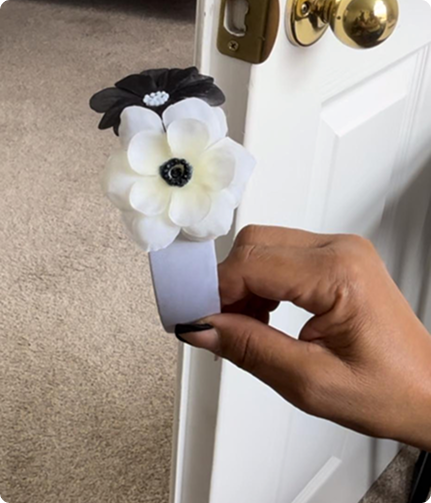
She called it Ndisguise — short for “in disguise.” The idea was simple: hide advanced safety tech inside something beautiful enough to wear every day.
“If safety devices looked beautiful, maybe more people would actually wear them.”
The Idea
Discreet protection designed to blend into daily life
The challenge was human, not just technical — create something subtle enough to disappear into personal style, yet powerful enough to help in a critical moment.
Live location sharing
Send location data to emergency contacts without opening an app or drawing attention.
Silent and subtle triggering
Trigger assistance through a discreet interaction instead of a visible panic-device button.
Wearable first
Make it normal jewelry first, so people would actually want to wear it every day.
From Breadboards to Band Designs
Turning a rough prototype into a believable product
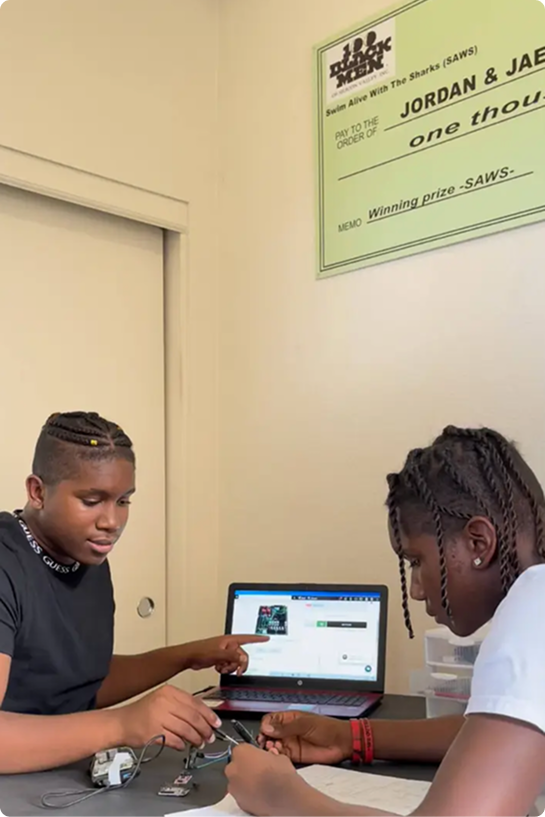
The first prototype was messy — breadboards, wires, and jumper cables taped to a silicone band. But every experiment moved the idea closer to something usable.
We began miniaturizing from off-the-shelf Arduino modules to custom PCB layouts, trimming every millimeter until the electronics started disappearing into the form factor.
What early testing validated
- Dual-trigger system using a tap sequence or hold press
- Micro-GPS and GSM module with silent transmission
- Haptic feedback motor for confirmation without light or sound
It wasn’t just a bracelet anymore. It was a lifeline, reimagined.
Shrinking the Impossible
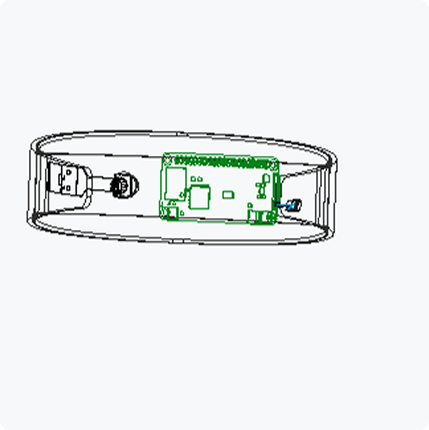
Miniaturization became a war against physics
Every trace, antenna, and millimeter of casing had to earn its place inside a 10 mm-thick band. The team rethought both electronics and form at the same time.
Power
Custom-shaped lithium polymer cells preserved battery life without breaking the silhouette.
Flexibility
Polyimide flex circuits allowed the internal system to contour naturally around the wrist.
Connectivity
Micro-SIM with e-SIM fallback removed bulky mechanical compromises.
Finish
Clean metal surfaces, a minimalist clasp, and a subtle LED edge made it feel like jewelry.
From STEM Kit to Smart Fashion
Bringing industrial design and fashion design together
Instead of forcing users to wear something that looked alarming, the final direction explored styles that felt aspirational, wearable, and personal.
Everyday minimalism
Brushed metal core with a leather band for daily wear and subtle confidence.
Tech-wear line
Silicone form with tactile ribs for grip and a more athletic, functional expression.
Formal line
Anodized aluminum with a soft satin strap for dressier occasions.

Each direction could trigger alerts in under 1.5 seconds with discreet vibration confirming activation — no flashing lights, no panic-button look, just confidence quietly worn.

The Human Element
Empathy was the real benchmark
Testing Ndisguise wasn’t just about electronics. We ran small workshops with high-school students, college commuters, and night-shift nurses to understand whether the concept felt empowering or intrusive.
“I’d wear this even if it didn’t have the tech.”
That was the breakthrough. The project crossed from functional safety into emotional design — making users feel empowered, not afraid.
Ready for the World
From kitchen-table idea to manufacturable prototype
Nia’s design won Best Innovation in Youth STEM and received early-stage funding for pilot manufacturing. By version 3, Ndisguise had Bluetooth fallback, encrypted signal relay, and a battery designed to last a week on standby.
Safety isn’t a luxury — it’s a design choice.
The Future & Reflection
Technology becomes humane when it disappears into real life
The next step is material intelligence — exploring graphene fiber sensors for pulse and temperature monitoring, creating a version that protects and observes wellness at the same time.
Because true safety isn’t only about emergencies; it’s about awareness.
Ndisguise taught us that trust starts with design, not dashboards. The most powerful devices are the ones people forget they’re wearing.
Let’s build something meaningful