Chicken Farm Nest Boxes

Case Study

HenGear — When Farm Equipment Learned to Think

A practical RFID system that turned nest boxes into data-driven decision tools.

HenGear didn't come to us with a vague idea.


They came with a real farm problem.


On small farms, egg production is often a guessing game. You know how many eggs you collect — but not which hens are pulling their weight.


Some hens lay daily.

Some stop laying quietly.

And without invasive checks or constant observation, it's almost impossible to tell the difference.

"Can we know which hens are laying — without touching the hens?"

THE IDEA

The hypothesis was straightforward:


If a hen regularly enters a nest box, she is likely laying.


If she rarely or never enters, she probably isn't.


So instead of tracking eggs, we track behavior.


The challenge?


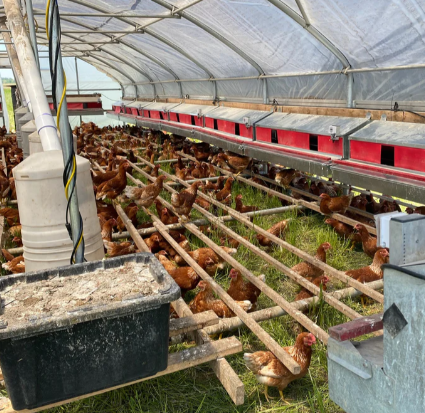
Doing this reliably in a barn — not a lab.


THE REAL WORLD PROBLEM (AND WHY THIS WAS HARD)

RFID looks easy on paper.


Barns are not paper.


From day one, we identified the real failure modes:


  • Metal mesh reflecting RF energy
  •  


  • Damp bedding detuning antennas
  •  


  • Tight physical spaces
  •  


  • Tag orientation changing constantly as hens move
  •  


  • Hens standing near the box but not entering (false positives)
  •  


  • Multiple birds clustering at entrances
  •  


As outlined early in the project, barn-world noise was the real enemy — not electronics.

"This was not a 'stick an RFID reader on it' problem."

ENGINEERING THE SYSTEM (NOT JUST THE HARDWARE)

We approached the system as a controlled RF volume, not a reader.


Key decisions:


  • Tag selection optimized for orientation tolerance and animal comfort
  •  

  • Antenna geometry designed to collapse the read field inside the nest box
  •  

  • Damping strategies to prevent reads from hens standing outside or passing nearby
  •  

  • Entry + exit logic, not just presence detection
  •  

  • Time-stamped event logging tied to unique hen IDs
  •  


Every read had to mean something.


No ghost data.

No inflated counts.

No farm owner guessing what the numbers meant.

"Every read had to mean something."

RFID Technology

DATA WITHOUT HEADACHES

The system records:


Hen ID

Date

Time

Entry / exit events


But raw data wasn't the goal.


The real outcome was actionable insight:


  • Identify non-laying hens early
  • Improve feed efficiency
  • Reduce unnecessary flock size
  • Make decisions without stress or speculation


No complicated dashboards.

No farm-tech overkill.


Just clarity.

PLACEMENT WAS EVERYTHING

One of the most critical design conversations wasn't about firmware — it was about where this system lives.


We explored:


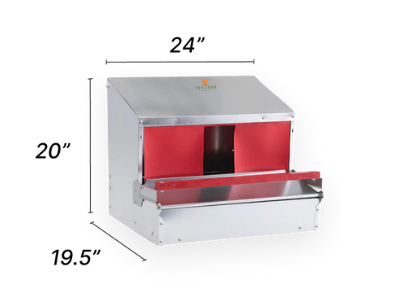
  • Embedding RFID hardware directly into HenGear's


    existing nest boxes
  •  

  • Offering a separate retrofit kit
  •  

  • Owner-installed vs factory-placed antennas
  •  

  • The consequences of even a few centimeters of


    misplacement
  •  


Why it mattered:


A poorly placed antenna doesn't fail loudly — it lies quietly.


False positives are worse than no data.


So the system was engineered to be physically opinionated — guiding correct placement instead of trusting it.


Farm Equipment

CONNECTIVITY: PRACTICAL OVER PERFECT

We designed the system around real farm usage, not Silicon Valley assumptions.


Key considerations:


  • Minimal maintenance
  •  

  • No constant user interaction required
  •  

  • Optional local sync (BLE / network when the owner is nearby)
  •  

  • Scalable path to cloud or portal integration without forcing it upfront
  •  


Technology that waits quietly until needed.

"Technology that waits quietly until needed."

FROM SOW TO WORKING SYSTEM

This project moved exactly the way good engineering should:


  • Clear SOW
  •  

  • Risk identification early
  •  

  • Field-reality-first design decisions
  •  

  • Controlled experimentation
  •  

  • Hardware + logic refined together
  •  


A system that works where it matters — on the farm.


Not a demo.


Not a prototype.


A usable, deployable system.


THE RESULT

HenGear didn't just add a feature.


They added intelligence to a physical product line.


Nest boxes became data sources.

Flock management became measurable.

Guesswork disappeared.


This wasn't about RFID.


It was about respecting the environment, the animals, and the farmer's time.


"Nest boxes became data sources. Guesswork disappeared."

WHAT THIS PROJECT PROVED

Real innovation starts by admitting where tech fails


Environment matters more than specs


Hardware, placement, and logic must be designed together


The best systems disappear into daily life


HenGear didn't need "smart farming."


They needed quietly correct farming.


And that's exactly what we built.


"Ready to turn a physical product into a thinking system?"